
Sourdough Bread

Ingredients at a glance
There's something truly magical about the smell of freshly baked bread — warm, enveloping, and deeply comforting. Today, I'm taking you into the world of slow, natural bread-making with a special recipe for a sourdough loaf. It's not just the flavor that sets this bread apart, but the time and care we pour into the dough: every fold, every rest, every rise works together to create that soft, open crumb and irresistibly crispy crust that makes homemade bread so wonderfully unique. Get ready to get your hands a little floury and fill your kitchen with the most incredible aromas — your journey to the perfect loaf starts right here!
Method
Feed the Sourdough Starter
In the morning, around 7:00 AM, feed your sourdough starter using a 1:5:5 ratio. Dissolve 10g of liquid starter in 50g of water, then add 50g of flour and mix until the mixture is smooth and lump-free. Leave it to rise until doubled in size — in my case, this took about 10 hours.
Step 1: Mix the Dough
In a large bowl, combine 100g of active sourdough starter with 300g of water and all of the bread flour. Mix until fully incorporated.
Step 2: Add Salt and Rest
Once all the flour has been absorbed, add the salt and the remaining 30g of water. Continue mixing until the dough starts to develop some strength and elasticity. Cover and let the dough rest for 30 minutes.
Folding
After the first rest, perform a round of "coil folds": slide your hands under the center of the dough, lift it up, let the bottom half fall freely, then fold the dough back over itself. Repeat 3–4 times, rotating the dough 90° between each fold. Repeat this process every 30 minutes for a total of 2 hours.
Bulk Rise
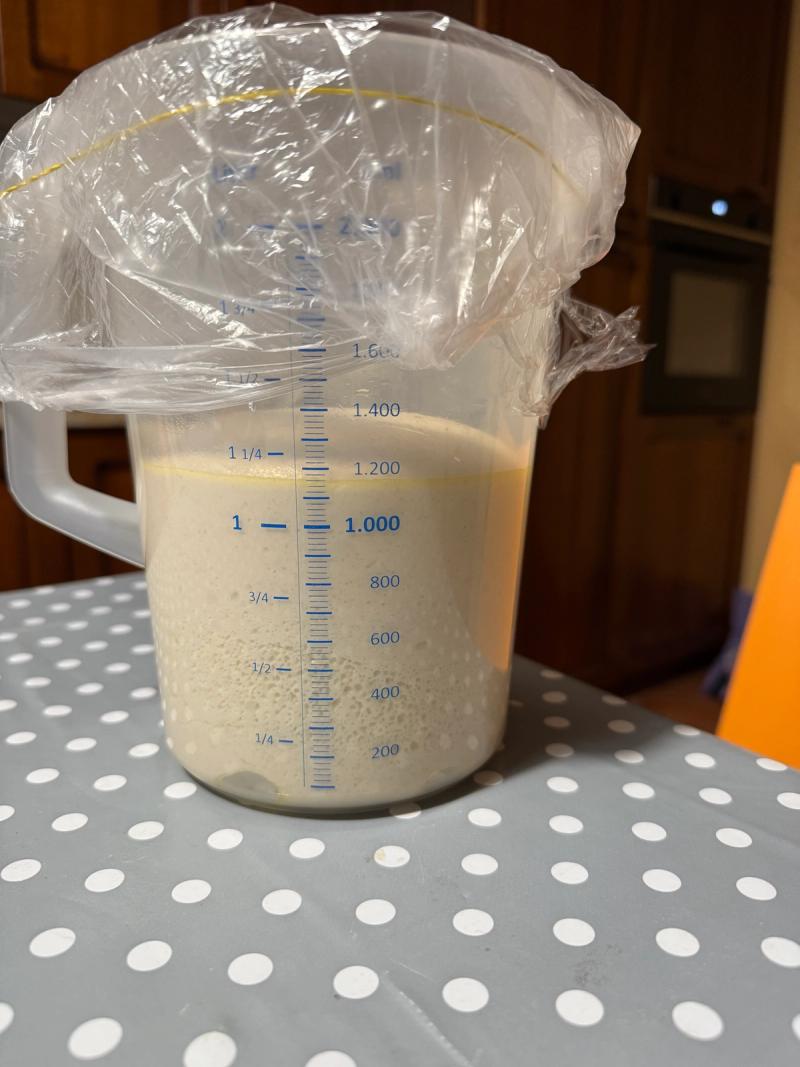
Once you've completed all the folds, transfer the dough to a lightly oiled, graduated container and leave it to rise until doubled in size.
Shaping
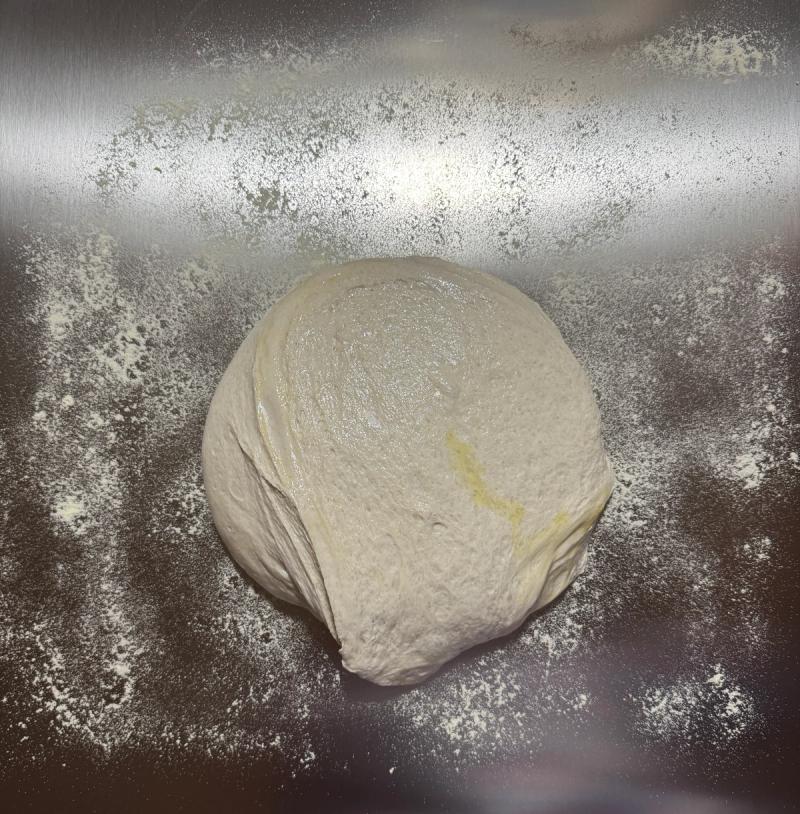
Once the dough has fully risen, it's time to shape it. Turn the dough out onto a clean work surface and gently stretch it into a rough rectangle. Fold one short end to the center, then fold the other end on top, like a letter. You'll end up with a long, narrow strip — starting from one short end, roll it up tightly into a round loaf. Pinch the open ends closed with your hands, then place the dough seam-side up into a well-floured proofing basket (banneton) lined with a floured cloth. The side that was facing down on the work surface should now be facing up in the basket. Cover the basket with a shower cap or plastic wrap and refrigerate for 12–24 hours.
Baking
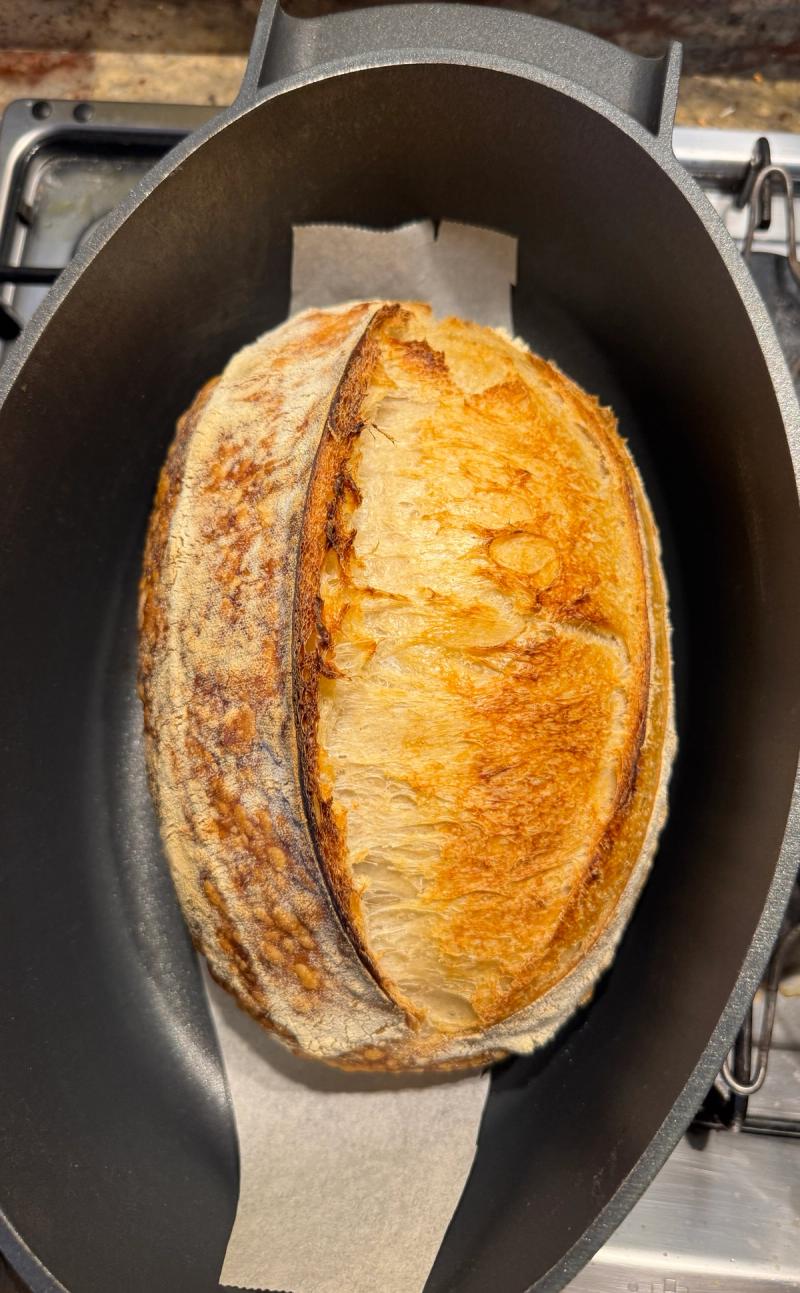
Place a cast iron Dutch oven in your oven while it's still cold, then preheat to 480°F (250°C) on conventional (static) mode. Let the pot heat up along with the oven. Once the oven is fully preheated, remove the dough from the refrigerator and carefully turn it out onto a sheet of parchment paper. Using the parchment paper as a sling, lower the dough into the hot Dutch oven, cover with the lid, and bake. After 6–7 minutes, remove the pot from the oven, take off the lid, and score the top of the loaf lengthwise with a sharp blade or lame. Return the covered pot to the oven and bake for another 15 minutes. Then, lower the temperature to 425°F (220°C), remove the lid, and continue baking for a further 20 minutes, or until the crust is deep golden brown.
Sourdough Bread
There's something truly magical about the smell of freshly baked bread — warm, enveloping, and deeply comforting. Today, I'm taking you into the world of slow, natural bread-making with a special recipe for a sourdough loaf. It's not just the flavor that sets this bread apart, but the time and care we pour into the dough: every fold, every rest, every rise works together to create that soft, open crumb and irresistibly crispy crust that makes homemade bread so wonderfully unique. Get ready to get your hands a little floury and fill your kitchen with the most incredible aromas — your journey to the perfect loaf starts right here!
Ingredients
- 10g liquid sourdough starter (li.co.li)
- 50g water
- 50g all-purpose flour
- 100g active liquid sourdough starter (li.co.li)
- 500g strong bread flour
- 320g water
- 12g salt
Instructions
- 1. In the morning, around 7:00 AM, feed your sourdough starter using a 1:5:5 ratio. Dissolve 10g of liquid starter in 50g of water, then add 50g of flour and mix until the mixture is smooth and lump-free. Leave it to rise until doubled in size — in my case, this took about 10 hours.
- 2. In a large bowl, combine 100g of active sourdough starter with 300g of water and all of the bread flour. Mix until fully incorporated.
- 3. Once all the flour has been absorbed, add the salt and the remaining 30g of water. Continue mixing until the dough starts to develop some strength and elasticity. Cover and let the dough rest for 30 minutes.
- 4. After the first rest, perform a round of "coil folds": slide your hands under the center of the dough, lift it up, let the bottom half fall freely, then fold the dough back over itself. Repeat 3–4 times, rotating the dough 90° between each fold. Repeat this process every 30 minutes for a total of 2 hours.
- 5. Once you've completed all the folds, transfer the dough to a lightly oiled, graduated container and leave it to rise until doubled in size.
- 6. Once the dough has fully risen, it's time to shape it. Turn the dough out onto a clean work surface and gently stretch it into a rough rectangle. Fold one short end to the center, then fold the other end on top, like a letter. You'll end up with a long, narrow strip — starting from one short end, roll it up tightly into a round loaf. Pinch the open ends closed with your hands, then place the dough seam-side up into a well-floured proofing basket (banneton) lined with a floured cloth. The side that was facing down on the work surface should now be facing up in the basket. Cover the basket with a shower cap or plastic wrap and refrigerate for 12–24 hours.
- 7. Place a cast iron Dutch oven in your oven while it's still cold, then preheat to 480°F (250°C) on conventional (static) mode. Let the pot heat up along with the oven. Once the oven is fully preheated, remove the dough from the refrigerator and carefully turn it out onto a sheet of parchment paper. Using the parchment paper as a sling, lower the dough into the hot Dutch oven, cover with the lid, and bake. After 6–7 minutes, remove the pot from the oven, take off the lid, and score the top of the loaf lengthwise with a sharp blade or lame. Return the covered pot to the oven and bake for another 15 minutes. Then, lower the temperature to 425°F (220°C), remove the lid, and continue baking for a further 20 minutes, or until the crust is deep golden brown.


